01
Map the lanes
We trace the paths that carry the most traffic and note where graying is heaviest.

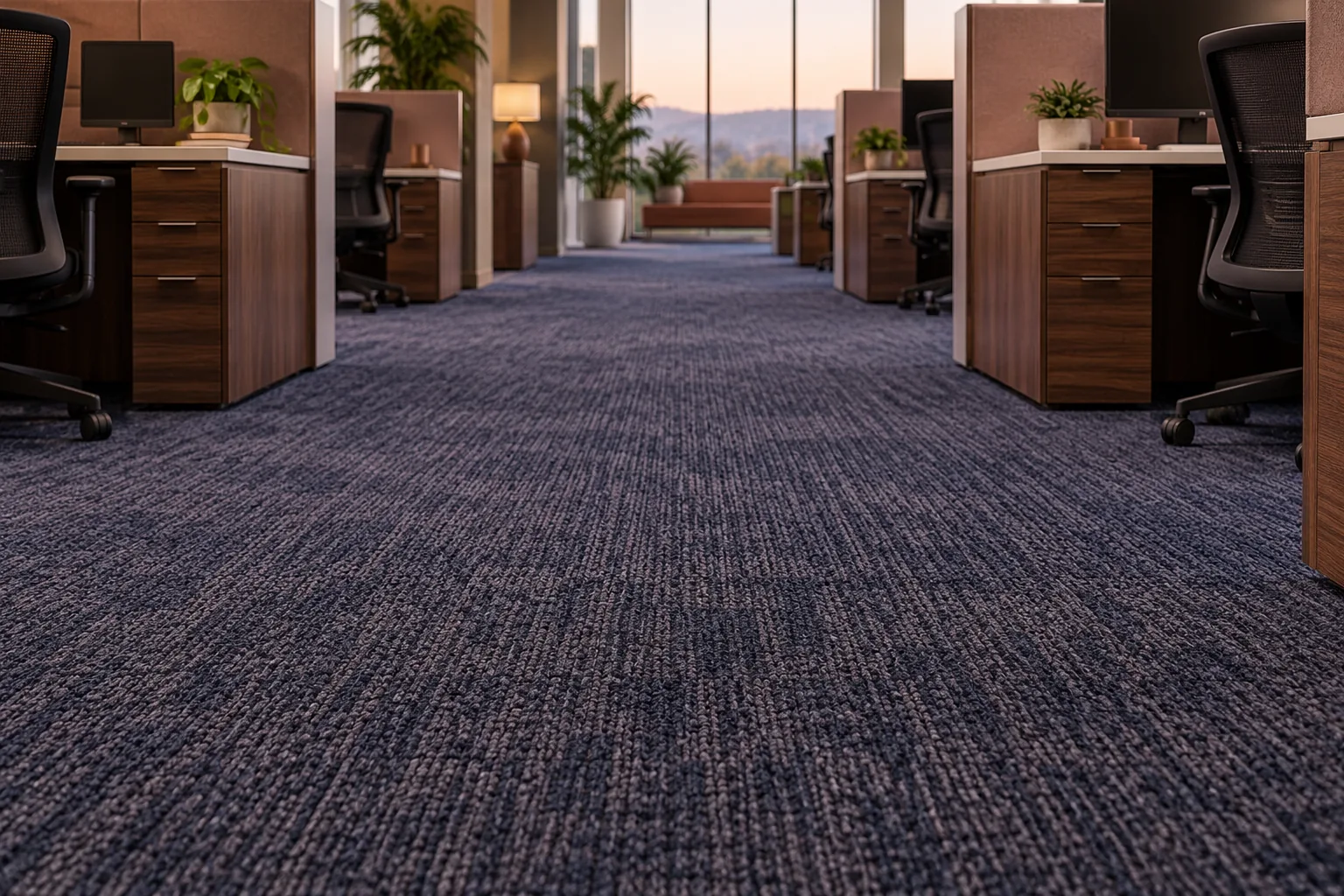
Traffic lane restoration
The paths people walk every day turn gray first. We concentrate on those lanes so the whole room reads as one clean floor again.
Every building has paths that take most of the foot traffic: from the front door to the elevator, down the main corridor, into the break room and along the aisle to each desk. Soil builds up fastest there, and the constant grinding flattens the pile so it reflects light differently. The result is a gray or shadowed path through otherwise clean carpet. Traffic lane cleaning puts concentrated effort into those paths with heavier pre-treatment, more agitation and restoring extraction.
Cleaning the lanes to match the rest of the room is the goal. Over-cleaning a path makes it stand out just as much as neglecting it, so crews blend the edges and finish with grooming that lifts the flattened pile. Once the lanes are restored, interim encapsulation or bonnet visits focused on those same paths keep them from graying again, and entrance mats at the doors stop much of the soil before it arrives.
We map your traffic lanes during your free walkthrough and set the frequency by how fast they gray. A busy lobby path gets attention every few weeks, while a side corridor gets it a few times a year. Work runs on evenings and weekends, and the written quote shows which lanes are covered and how often, so the budget goes where the wear actually is.
Step by step
01
We trace the paths that carry the most traffic and note where graying is heaviest.
02
Lanes get a stronger pre-treatment and agitation, then a restoring rinse and recovery.
03
Edges are blended into the surrounding carpet and the pile is lifted so the room looks even.
A few useful answers
Two reasons. Fine soil is ground deep into the pile where vacuums do not reach, and the pile itself is flattened and scratched, which scatters light. Restoring cleaning removes the soil and grooming lifts the fiber, which brings back most of the color.
Lane-only visits make sense between full cleans and keep the cost down. When the lanes and the rest of the room are both due, cleaning everything together gives the most even result. We blend lane work into the surrounding carpet either way so no stripes appear.
Stop soil at the door with clean, properly sized entrance mats, vacuum the lanes daily, and schedule interim encapsulation on those paths between deep cleans. Protector on restored lanes also helps the fiber release soil.
Grit acts like sandpaper on the fiber. Removing it from the lanes regularly slows the wear that eventually forces replacement, which protects one of the largest finish investments in the building.
More services
01 / Deep cleaning
Restorative deep cleaning that flushes grit and residue out of the whole pile.
View details02 / Entrances
Walk-off mats cleaned so they keep catching grit before it reaches your carpet.
View details03 / Programs
A year-round schedule that mixes interim and deep cleaning by traffic zone.
View detailsIndustries
01 / Building type
Classrooms, libraries and hallways restored during breaks and kept clean all year.
View details02 / Building type
Sanctuaries, aisles and fellowship halls cleaned between services and events.
View details03 / Building type
Ballrooms, exhibit halls, meeting rooms and pre-function areas turned around between events.
View detailsResources