01 / Carpet tile
Carpet tile cleaning
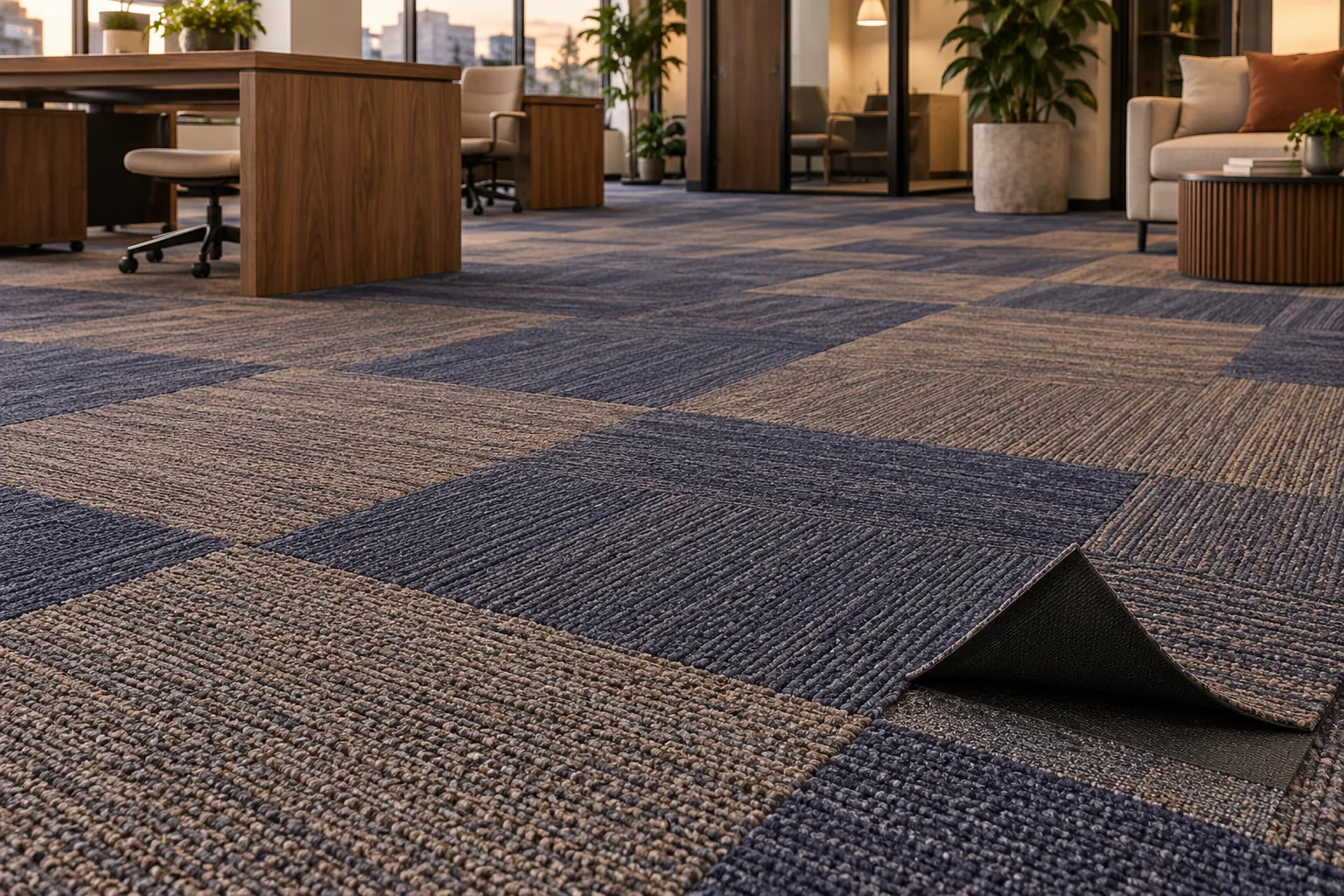
Methods matched to modular tile, with spot replacement areas cleaned to blend in.
View details
Guide
Carpet tile makes repairs easy, but only when the floor is cared for as one surface. This guide covers daily care, cleaning methods, spot work and tile replacement.
Carpet tile is a modular floor: square or plank units with a stable backing, laid side by side and held with releasable adhesive. That design is why it dominates offices, schools and clinics. Damaged tiles come out one at a time, patterns rotate easily, and cabling underneath stays easy to reach. The same design also creates the floor’s weak points. Every tile has four edges, and seams and adhesive react badly to too much moisture or aggressive scrubbing.
Caring for tile well means treating it as one surface while respecting the joints. Cleaning that soaks the floor loosens adhesive and lets edges curl, and water that runs down a seam carries soil with it and leaves dark lines between tiles. Methods that control moisture and recover it well keep the backing stable, the seams tight and the floor flat, which is what keeps a tile floor looking like a single piece of carpet.
Vacuuming is the foundation for tile, just as it is for broadloom. Use an upright with a beater bar in good condition, run it across the direction of the pile in traffic areas, and pay attention to the seams, where grit collects. Entrance mats at the doors reduce how much soil reaches the tiles in the first place. Chair mats under rolling desk chairs prevent the crushed, gray circles that casters leave behind.
Spills on tile follow the same rule as any carpet: blot, never rub, and avoid flooding the area. Moisture that reaches the adhesive loosens the tile, so use as little liquid as possible. Flag stained tiles for professional treatment, and keep a supply of spare tiles from the original installation so a permanently damaged unit is replaced with a matching one.
Low-moisture encapsulation is the best fit for routine tile maintenance. It cleans the face of the tile, dries fast and keeps water away from the backing and seams, so offices and classrooms are ready the next morning. For restoring cleans, well-controlled hot water extraction with strong recovery removes deeper soil without saturating the tile. Either way, the crew should work with the pile direction of each tile and groom it as it dries.
Because tile wears unevenly, clean it by zone. Traffic lanes, entrances and the tiles around copiers and kitchenettes gray first and need the most frequent attention. Quarter-turned and patterned installations hide wear differently than monolithic ones, so a good crew reads the pattern before deciding how to treat it. Seams and edges deserve a check after each visit, because a lifting tile is easy to fix early and expensive to ignore.
Replacement is the great advantage of carpet tile, yet a brand-new tile next to one that has seen years of traffic stands out sharply. The fix starts before the swap: clean the surrounding area evenly so the existing floor is as close to its original color as possible. Then place the new tile with the pile running in the same direction as its neighbors, or in the same quarter-turn pattern.
Some facilities rotate tiles from low-traffic areas into the lanes and put new tiles in the quieter spots, which spreads wear and hides the difference. Whatever approach you choose, keep spare tiles stored flat in a climate-controlled room, label them by lot and area, and book a cleaning after replacement so the whole floor settles into one even appearance.
A few useful answers
Not when it is done with controlled moisture and strong recovery so the backing and adhesive stay dry. For routine care, low-moisture encapsulation is the better choice because it dries faster.
Dark seams come from soil carried down between tiles by too much water, or from grit packed into the joints. Low-moisture cleaning and careful vacuuming along the seams prevent them, and restoring treatment lifts lines that have already formed.
Flat, in their boxes, in a dry room with steady temperature, labeled by lot and by the area they came from. Tiles from the original lot match the installed floor far better than a later order.
Services
01 / Carpet tile
Methods matched to modular tile, with spot replacement areas cleaned to blend in.
View details02 / Fast dry
Encapsulation cleaning that dries fast, so busy floors go back into use the same night.
View details03 / Stains
Coffee, ink, toner and soda spots treated before they set or spread.
View details