01 / Entrances
Entrance and walk-off mat cleaning
Walk-off mats cleaned so they keep catching grit before it reaches your carpet.
View details
Guide
The easiest soil to remove is the soil that never comes inside. This guide explains how to size, place and maintain entrance mats so they protect the carpet beyond the door.
Most of the soil in a commercial building arrives on shoes. Sand, grit, dust, mud and water from parking lots and sidewalks travel through the front door and get deposited in the first steps inside. Grit is the real enemy of carpet, because it cuts and scratches the fiber with every footstep, dulling the color and wearing down the pile in the traffic lanes. Stopping that soil at the entrance protects every carpeted room beyond it.
That makes entrance matting one of the most effective carpet care tools a facility manager controls. A well-designed matting system catches dry soil and moisture before it reaches the carpet, which slows graying in the lobby and corridors, cuts how often interim cleaning is needed and stretches the interval between restoring cleans. It is a small investment that pays off on every square foot of carpet in the building.
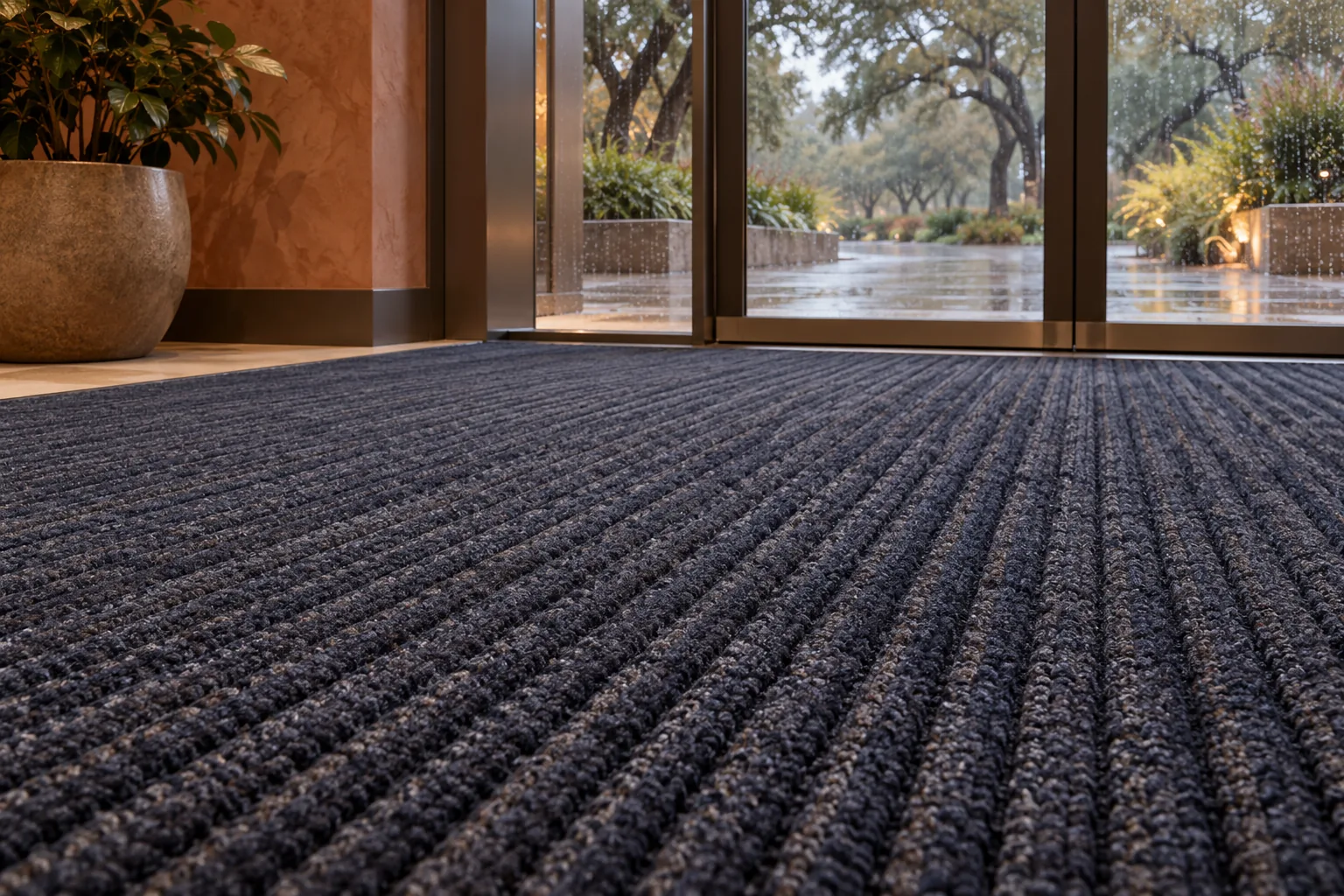
Good matting works in stages. An outdoor scraper mat with an aggressive surface knocks loose mud and grit off shoes. Inside the vestibule or just past the door, a combination scraper and wiper mat removes finer soil. A wiper mat then dries shoes and catches fine dust before people step onto the carpet. Each stage handles a different kind of soil, and together they catch far more than any single mat.
Length matters more than most people expect. Every footstep on a mat removes a little more soil, so a mat long enough for several steps on each foot outperforms a short one by a wide margin. Mats should span the full width of the doorway traffic, lie flat with secure edges and sit where people actually walk, including side and staff entrances that see steady use.
A mat full of soil stops protecting the carpet and starts feeding it. Once the ribs and pile of a wiper mat are packed with grit, every step releases dirt instead of trapping it, and the carpet just past the mat grays quickly. Daily vacuuming keeps the top of the mat clear, but fine soil and oily residue settle deep in the mat over time, and deep cleaning is what removes them.
Put mat deep cleaning on the same calendar as interim carpet care: more often during wet months and dusty seasons, less often in mild weather. Check mats on each visit for curled edges, slipping backings and worn surfaces, and replace mats that no longer grip or trap soil. The carpet zone just inside the mats deserves its own regular cleaning, since it catches whatever the mats miss.
The return on good matting shows up across the whole carpet program. Lanes stay brighter for longer, interim visits go faster because there is less soil to remove, and restoring cleans stretch further apart. In buildings with heavy outdoor exposure, such as schools beside playing fields, apartment lobbies off busy parking lots and offices next to construction, the difference shows within weeks.
To see where matting will help most, walk your entrances after a rainy day and note where wet footprints and grit fade out on the carpet. That point shows how far soil travels past the current mats. A free walkthrough of your entrances and carpet adds the same view, and the written quote folds mat cleaning into your regular carpet visits.
A few useful answers
Long enough for several steps on each foot before people reach the carpet. Short mats catch only a fraction of the soil. The busier and more exposed the entrance, the longer the matting system should run.
The mats are too short, full of soil or missing a stage. A packed mat releases dirt instead of trapping it. Deep cleaning the mats and lengthening the system fixes most of the problem.
Every door people use regularly, including staff, side and parking garage entrances. Soil from a back door reaches the carpet just as easily as soil from the front.
Services
01 / Entrances
Walk-off mats cleaned so they keep catching grit before it reaches your carpet.
View details02 / Traffic lanes
Gray paths at doors, corridors and desks brought back toward the room’s color.
View details03 / Protection
Protector applied after cleaning so the next spill blots up instead of soaking in.
View details