
Resources
Carpet pile height and construction: loop, cut and everything between
Loop, cut, textured or a mix of both: the way a carpet’s yarn stands up decides how it looks, how traffic shows on it and what a crew does to keep it clean.
Pile is the part of the carpet everyone walks on
Pile is the yarn surface of a carpet: the loops or cut tufts that stand up from the backing. Two floors in the same color can behave in opposite ways because their pile is built differently. One shrugs off a year of rolling chairs and still reads as flat and even, while the other shows every footprint by lunchtime. Knowing what your pile is made of explains a lot about why a lobby or corridor looks the way it does between cleanings.
Commercial carpet is either tufted or woven. CRI’s installation standard describes tufting as needles pushing pile yarn into a primary backing, and woven carpet as fabric produced on a loom, in constructions such as Wilton, Axminster and velvet. Either way, the yarn ends up in one of a handful of pile styles, and each style has its own look, its own way of showing wear and its own cleaning habits.
Pile styles side by side
The table sets the common commercial pile styles next to each other. Heights are relative: the only firm figure here is the ADA maximum covered further down.
| Pile style | Relative height | Look | Traffic and rolling loads | How soil and wear show | Cleaning notes |
|---|---|---|---|---|---|
| Level loop | Low, every loop the same height | Flat, tight and uniform | Firm surface keeps rolling drag low | Gray lanes; loops crush flat over time | Frequent vacuuming; snip sprouted loops, never pull |
| Multi-level loop | Low, with high and low loops | Sculpted pattern from loop heights | Pattern hides soil in busy rooms | High loops flatten first, blurring the pattern | Agitate into the low loops where grit settles |
| Cut pile | Low to medium, upright cut tufts | Smooth, soft, even color | Softer pile adds drag under wheels | Shading, footprints and vacuum marks | Groom the pile one direction after cleaning |
| Textured cut pile | Medium, tightly twisted cut yarn | Casual, flecked surface | Twist masks footprints in moderate traffic | Yarn untwists and mats in lanes | Lift matted lanes before they set |
| Cut-and-loop | Mixed: cut tufts beside loops | Pattern drawn by cut and loop areas | Pattern disguises soil between visits | Lanes flatten the pattern contrast | Groom cut areas; check loops for snags |
None of these styles is wrong for a commercial building. The point of the comparison is to set expectations: a cut pile boardroom will show shading that a loop pile corridor never will, and a sculpted loop will hide soil that a flat loop puts on display.
Loop pile: level and multi-level
In a loop pile, the yarn goes down into the backing and back up without being cut, leaving a small arch on the surface. Level loop keeps every arch at one low height, so the face is tight and flat. That firm face suits floors where chairs, carts and wheelchairs cross all day, since the Access Board notes that soft, thick carpet is harder to roll across.
Multi-level loop, also called textured loop, mixes taller and shorter loops to draw a pattern into the face. The pattern disguises everyday soil, which suits lobbies and busy meeting rooms. The trade-off is that grit settles among the lower loops, so cleaning has to work down into the texture rather than skim the tops. When a loop works loose and stands above the rest, CRI’s troubleshooting guidance is to snip it level with the surface and never pull it, since pulling can unravel a whole row.
Cut pile, textured cut pile and cut-and-loop
Cut pile is made by slicing the tops of the loops so each tuft stands upright. The result feels softer and looks richer underfoot. Its signature behavior is shading. CRI describes shading as a change in the direction of the pile rather than in its color: light hits tufts leaning one way differently from tufts leaning the other, so patches look lighter or darker. A related condition, pile reversal (sometimes called watermarking or pooling), is usually permanent, has no known cause and is not treated as a manufacturing defect.
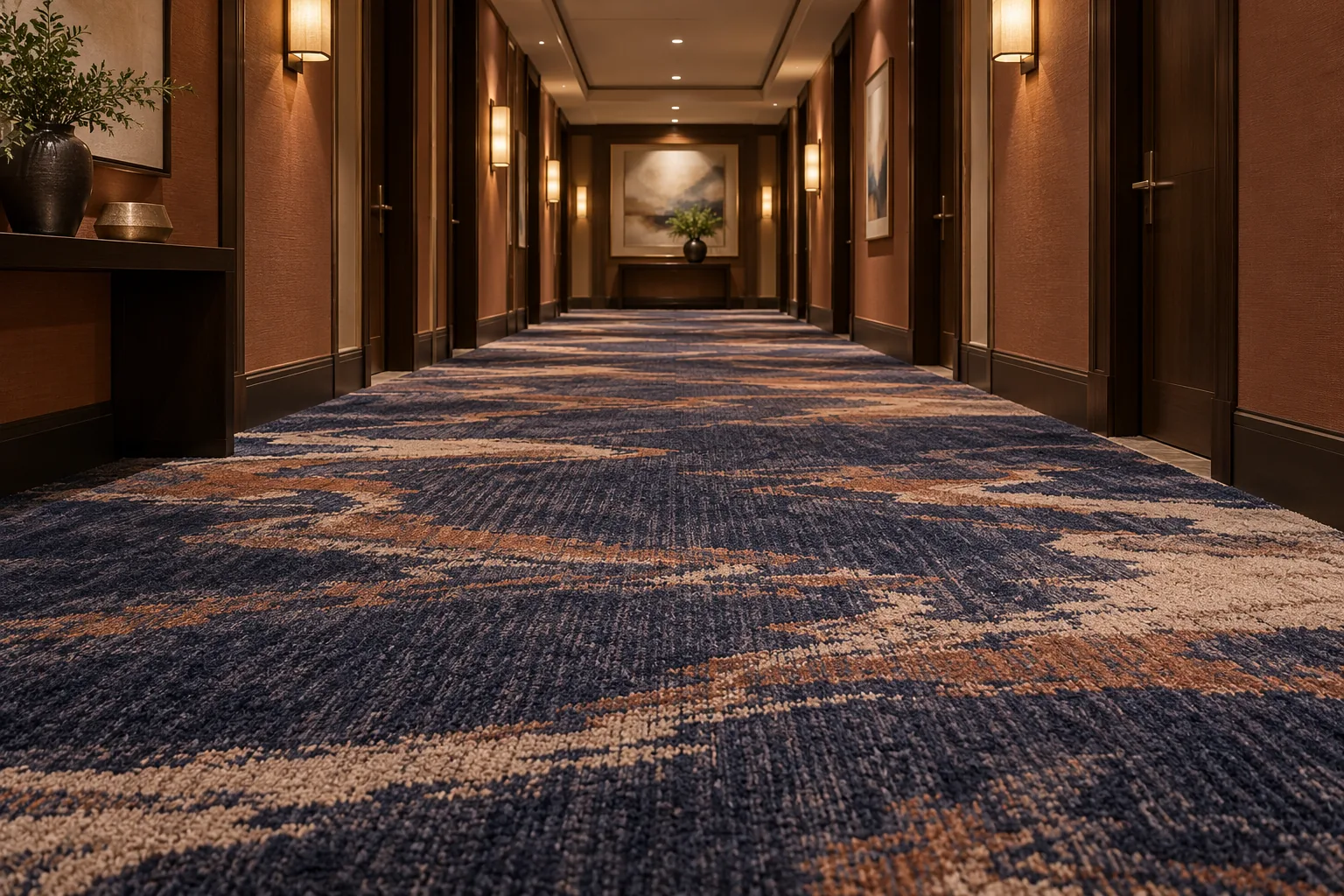
Textured cut pile twists the yarn tightly before setting it, so the surface looks casual and hides footprints. In heavy lanes the twist can open up, and CRI defines that untwisting and tangling as matting, separate from crushing, which is a loss of pile thickness. Cut-and-loop combines both constructions in one carpet, usually to draw a pattern. In a hotel corridor or ballroom, that pattern helps a large floor stay presentable between visits, and our hotel carpet cleaning works those floors in sections around occupancy.
Density, face weight, gauge and tuft bind in plain words
Specification sheets describe pile with a few recurring terms. Density is how tightly the pile yarn is packed into the carpet. Face weight is the amount of yarn on the surface for a given area. Gauge is the spacing of the tufting needles across the width, and stitch rate is how many tufts are placed along each inch of length. Packed, low pile keeps soil closer to the surface, where vacuuming reaches it.
Tuft bind is the force needed to pull a single tuft out of the backing, measured under ASTM D1335. It matters in commercial buildings because snagged tufts and loops spread. The VA’s master carpet specification, for example, treats roughly 10 pounds of tuft bind as adequate for loop pile and roughly 3 pounds for cut pile, with a higher target of about 12 pounds for loop pile in severe-wear areas.
The ADA half-inch pile rule
The 2010 ADA Standards for Accessible Design, section 302.2, set a maximum pile height of 1/2 inch (13 mm) for carpet and carpet tile on accessible floor surfaces, measured from the backing. The same section requires the carpet to be securely attached, with a firm cushion, pad or backing or none at all, and lists four textures: level loop, textured loop, level cut pile and level cut/uncut pile. Exposed edges have to be fastened and trimmed along their full length.
The Access Board’s advisory notes add that carpet increases rolling resistance and that thick, cushiony or loose carpet makes wheelchair maneuvering harder, which is why it prefers carpet laid without a soft pad. Which rules apply to a particular room is a question for your designer, architect or installer; we clean the carpet that is there.
How pile style shapes a cleaning plan
Pile style changes the details of a visit more than the method itself. Loop pile wants thorough, frequent vacuuming and a crew that watches for snags. Cut pile wants grooming after every clean so it dries standing in one direction, which keeps fresh shading from appearing. Textured and cut pile in lanes benefit from pile lifting before matting sets in. CRI also notes that what looks like worn carpet is often crushed, matted or soiled pile rather than lost fiber, so a traffic lane restoration visit is worth trying before anyone writes a floor off.
Restoring cleans on all of these piles use hot-water extraction, with interim visits chosen for the room’s schedule; our guide to choosing a carpet cleaning method walks through those choices. Manufacturers’ warranty terms differ by product, so bring the maintenance section of yours to the free walkthrough. We note the pile style in each area, and the written quote matches every zone to a method, a frequency and a time that works around your hours.
A few useful answers
Common questions.
Why does our cut pile carpet have light and dark patches?
That is shading. The tufts in those patches lean a different way, so they reflect light differently even though the color is unchanged. Grooming the pile in one direction after cleaning evens out ordinary shading for a time, while true pile reversal is usually permanent and is not considered a defect.
What is the maximum carpet pile height under the ADA?
Section 302.2 of the 2010 ADA Standards sets a maximum of 1/2 inch, measured from the backing, for carpet on accessible floor surfaces. Your designer or installer can confirm which areas of your building it covers.
A loop is sticking up out of the carpet. Should staff pull it?
No. Pulling a loose loop can unravel the row next to it. Snip it level with the surrounding pile with sharp scissors, and mention it at the next visit so the crew can check the area.
Does pile height change how carpet is cleaned?
Yes. Taller and softer pile holds soil lower down and needs grooming afterward, while low, dense loop gives up surface soil to vacuuming more readily. The walkthrough records each area’s pile so the visit fits it.
Can cleaning bring back crushed traffic lanes?
Cleaning removes the part of the problem that is soil. Grit packed into flattened pile makes lanes look worse than the fiber loss behind them, and restoring extraction with pile lifting clears it and raises the yarn. Pile that has lost thickness through wear stays flatter than the rest.